When Reduced Beading Means It’s Time for a New Ceramic Coating in San Jose in Ceramic Coating San Jose, CA
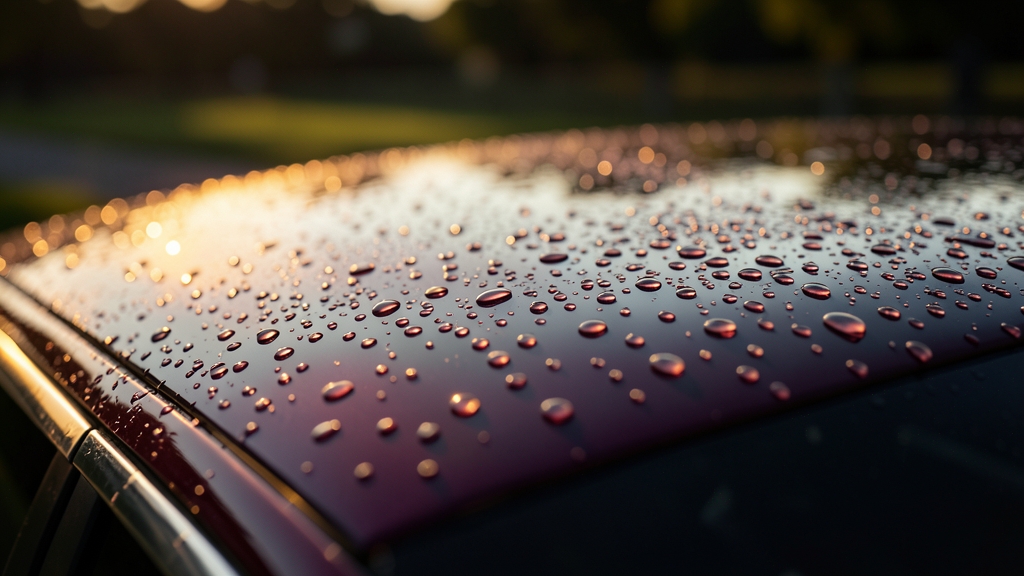
That tight, mirror-like beading you loved after your ceramic coating was applied doesn’t last forever. When water starts sheeting or flattening out instead of forming perfect spheres, it’s a clear sign the hydrophobic layer is breaking down. In our Bay Area climate, UV exposure and road grime accelerate this—so knowing the cues helps you act before the protection fades completely.
Why Beading Fades on Ceramic-Coated Vehicles
Ceramic coatings rely on a high concentration of silica (SiO2) or titanium dioxide to create a hydrophobic surface. Over time, environmental contaminants and UV rays degrade these nano-particles, reducing the water contact angle.
In San Jose, the combination of intense sunlight and airborne pollutants from Silicon Valley traffic speeds up this breakdown. Even high-quality coatings lose their beading effect as the polymer matrix weakens.
The 3 Stages of Hydrophobic Degradation
Stage one: Water still beads but less tightly, with some flattening at the edges. This is the earliest warning sign, often appearing after 12–18 months for mid-tier coatings.
Stage two: Beads spread wider and slide off slower. You’ll notice water spots forming more easily, especially after overnight parking in areas like Santa Clara or Sunnyvale.
Stage three: Water sheets across the surface like an uncoated car. At this point, the coating offers minimal protection, and the paint is vulnerable to etching and oxidation.
| Coating Grade | Expected Beading Lifespan | Key Factors |
|---|---|---|
| Consumer (DIY) | 6–12 months | Low SiO2, minimal UV resistance |
| Professional (Entry) | 18–24 months | Moderate SiO2, basic cross-linking |
| Professional (Premium) | 3–5 years | High SiO2, strong UV inhibitors, multi-layered |
| Hybrid (Ceramic + PPF) | 5–7+ years | Combines coating with paint protection film for extended durability |
Other Visual Signs Your Coating Is Failing
Reduced gloss or a duller finish often accompanies fading beading. If your car’s reflection looks hazy, the coating’s self-cleaning properties are likely compromised.
Water spots that etch into the paint are a late-stage red flag. These require paint correction before reapplying any coating, especially in hard-water areas like Milpitas or Campbell.
Applying a new ceramic coating over a failing one without proper decontamination and prep will trap defects and shorten the new coating’s life. Always start with a full paint correction.
How San Jose’s Climate Accelerates Coating Wear
The Bay Area’s Mediterranean climate means hot, dry summers and mild, wet winters. UV index often exceeds 8 in summer, breaking down the coating’s molecular bonds faster than in cooler regions.
Morning marine layer in areas like Cupertino deposits mineral-rich moisture on surfaces. Over time, these minerals can embed in the coating, further reducing hydrophobicity.
When to Reapply vs. When to Start Fresh
If beading is just starting to weaken but the coating still sheets water off, a maintenance spray or top-up can extend its life by 6–12 months. This works well for vehicles in low-mileage, garage-kept conditions.
For coatings past the sheeting stage, removal and a full reapplication are necessary. This often pairs with paint correction to address swirls or oxidation that developed beneath the old layer.
Pre-Reapplication Checklist
- Wash and decontaminate the vehicle with a clay bar or iron remover
- Inspect for water spots, etching, or oxidation
- Perform paint correction if defects are present
- Choose a coating grade matched to your driving habits and local conditions
- Consider adding paint protection film to high-impact areas like the hood and bumper
Extending Your Coating’s Life Between Applications
Regular maintenance washes with pH-neutral shampoos prevent premature degradation. Avoid automatic car washes with harsh brushes, which can strip the coating’s top layer.
Using a ceramic-boosting spray every 3–4 months helps refresh hydrophobicity. For vehicles in Sunnyvale or Santa Clara, where dust and pollen are heavy, more frequent touch-ups may be needed.
For commercial vehicles or fleets in San Jose, combining ceramic coatings with PPF on high-wear areas (like rocker panels) maximizes longevity. This hybrid approach is popular among local delivery and service vans.
Common Mistakes That Shorten Coating Lifespan
Applying coating over uncured paint or clear coat is a frequent error. Fresh paint needs 30–60 days to fully cure before a ceramic coating can properly bond.
Skipping surface prep, like not removing old wax or sealants, leads to poor adhesion. In our shop, we always perform a thorough decontamination and polishing step before any coating application.
How to Test Your Ceramic Coating’s Hydrophobic Strength
A simple water test can reveal whether your coating is still performing.
- 1Clean the Surface
Wash and dry a section of your car’s hood or roof to remove any dirt or residues that could skew the test.
- 2Apply Water Droplets
Use a spray bottle to mist a few droplets of water onto the panel. Avoid direct sunlight for accurate results.
- 3Observe the Beading
Check the shape of the droplets. Tight, high domes indicate strong hydrophobicity. Flat or spreading droplets mean the coating is failing.
- 4Test Water Sheeting
Tilt the panel slightly or drive at low speed. If water sheets off cleanly, the coating is still effective. If it leaves trails or spots, it’s time for a refresh.
- 5Compare to an Uncoated Area
Test an uncoated section (like a door jamb) for reference. The difference in beading will highlight the coating’s remaining performance.
Frequently Asked Questions
How often should I expect to reapply a ceramic coating in San Jose?
Most professional-grade coatings last 2–5 years here, depending on the product and how the vehicle is maintained. Entry-level or DIY coatings may need reapplication every 12–18 months due to our harsh UV and pollution levels.
Can I apply a new ceramic coating over the old one?
It’s not recommended. The old coating must be fully removed through polishing or a dedicated coating remover. Applying over a failing layer traps contaminants and prevents proper bonding, leading to premature failure.
Why does my ceramic coating bead less in winter?
Colder temperatures can temporarily reduce the coating’s hydrophobic performance, but it should return to normal in warmer weather. If beading doesn’t improve, the coating may be nearing the end of its life.
Does reduced beading mean my paint is unprotected?
Not immediately. The coating’s UV and chemical resistance may still be intact, but the self-cleaning and water-repellent properties are fading. However, once beading is gone, the protective layer is usually compromised soon after.
Is ceramic coating worth it for San Jose’s mild winters?
Absolutely. While we don’t face harsh snow or salt, our year-round UV exposure, pollen, and road grime take a toll on paint. A ceramic coating provides long-term protection that wax or sealants can’t match, especially for daily drivers in Cupertino or Campbell.
What’s the difference between ceramic coating and paint protection film (PPF)?
Ceramic coatings are liquid-applied and form a hard, hydrophobic layer on the paint. PPF is a physical urethane film that protects against rock chips and scratches. Many San Jose drivers combine both: PPF for impact areas and ceramic coating for the rest of the vehicle.